
Category: Без рубрики

  • How to learn to understand Art? It’s easier than it seems! There’s a tutorial.

    Do you really enjoy museums? I’m standing in the Hermitage, looking at a beautifully executed portrait. The man in the portrait is looking back at me. He doesn’t know me, and I don’t know him. Why should I care? What could possibly interest me in this portrait? The answer is: this work holds no interest for us. Someone, seeking to satisfy their vanity, commissioned the portrait, and the artist did the work.

    Yes, the artist’s skill is undeniable, but modern cameras can do better. It was probably truly impressive back then, but today’s people aren’t impressed.

    How can one learn to understand (fine) art? It’s difficult for the uninitiated to understand what to admire in a painting. You need to imagine when, why, and why the artist painted it.

    Perhaps the easiest way is with the Impressionists. A famous painting by Monet can evoke similar emotions to those that inspired the artist, but only if you’ve ever seen a similar landscape. But what if you haven’t gazed at the sea at dawn, or if you’re not a very impressionable person, or if your mind is too preoccupied with everyday worries?

    Another example is a portrait by Picasso. The painting will only confuse the viewer, but we need to pretend to be impressed by the work of the great artist.
    But one TV show reported that Picasso’s girlfriend was quite attractive, but with an independent, rebellious, willful, and unpredictable character. Perhaps Picasso was able to convey some of his girlfriend’s traits, fragmented by her personality, in a single picture.

    Look at the painting “Cain.” An ordinary, modern young man. Just like us. But if you superimpose what he did on this, it might evoke deep emotions in some: he’s just like me, and I’m just like him.

    Most paintings are simply commissioned, paid for, and carry no additional meaning. And the artist’s skill has long been surpassed by technology.

    Some paintings were relevant in their place and time. The artist could act as paparazzi. He depicted that life. Respectable people of that time, seeing the painting at an exhibition, might (generally) recognize themselves, and even his wife. There could be a scandal. But does the painting have artistic value?

    Malevich’s Black Square. What is it about? What can we find in this primitive image? Nothing. It gives us nothing. It draws out what’s within us, if it’s there.

    There are paintings about the eternal that will forever arouse genuine interest.
    For example, Rembrandt’s Danae and The Birth of Venus.

    It’s very easy to understand what the artists wanted to depict. There’s no need to look for hidden meanings or biblical themes. The artist simply wanted to depict a nude woman, and this theme will always excite people.

    In short, to understand fine art, you need:
    Sometimes to know history, humanity, or a specific person.
    Sometimes to be able to see nature.
    Sometimes just to look. And sometimes we have to admit to ourselves that we don’t see anything interesting in it.
  • What will fashion be like next year? It’s impossible to predict the whims of fashion, but we asked AI!

    Fashion is unpredictable and fickle. But those who have been around for a long time and have seen fashion’s various quirks begin to suspect that there must be some kind of consistency, some kind of laws or algorithms to how fashion changes.

    Fashion periodically returns. Often with some changes, but it always returns, repeating itself.
    Let’s say you have some fashionable clothes. You wear them with pleasure. Then a new fashion comes along for the ride. You hang your favorite items in your closet, then (in a year, two, three) throw them away.

    As soon as you’ve thrown out some more good things, the following year (or a couple of years later) they come back into fashion.

    It’s as if someone is watching us, waiting until we throw everything away, and then bringing almost the same things to stores and saying, “Did you throw it away? Now buy it.” A fashion industry conspiracy theory? Paranoia?

    Quite often, the idea arises that there are some laws governing fashion’s changes. Although there are alternative opinions. For example, that fabric manufacturers “rule the roost.” When they have unsold fabrics in their warehouses, they hire designers to create clothing from them. But this is, of course, a false theory.

    Sometimes they try to force fashion on us. Once upon a time, everyone was telling us that green was in fashion this year. It didn’t work. Then they suggested a terrible brown. People wear it and are surprised at how depressing it looks. Attempts to control or predict fashion usually fail. (Or is it just an illusion, and someone is controlling us?)

    Where is fashion going? Fashion isn’t going anywhere; it’s moving away. It’s moving away from its current state and toward something else. And what that “other” will be is difficult to predict. One could assume that the direction of development is in the opposite direction. I mean, people are moving from long to short, from narrow to wide, and so on.

    But what if we ask AI?

    I asked the AI:
    Study the patterns of change in fashion over the past few years and
    Give a forecast for 2027.
    Which direction will fashion take next year?
    What will be fashionable to wear in 2027?
    What dress lengths will be fashionable next year.
    What coat lengths will be fashionable next year.
    What color will be fashionable in clothing in 2027?

    The AI ​​responded:

    The future of fashion promises to be interesting!

    Based on an analysis of current trends and forecasts from leading global agencies such as WGSN and Coloro, as well as the Fall/Winter 2026/27 shows, we can create a fairly clear picture of what fashion will look like in 2027.

    The key idea for next year is emotional comfort. After periods of rapid change and overload, 2027 will be a time of “therapeutic” fashion, where clothing serves as a tool for restoration, expression of joy, and finding peace.

    🎨 Color Palette of the Year: From Radiance to Earth

    In 2027, we will see two major color trends. The first is bright and energetic, the second is calming and natural.

    • For the warm season (Spring-Summer):
    • Luminous Blue: This is an absolute leader. A versatile, dynamic, yet deep color. It fits perfectly with both evening and sporty looks.
    • Pop Pink: This color is a manifestation of joy and carefreeness. It reflects the “Strategic Joy” trend, where people look for the positive in the little things.
    • Energy Orange: A vibrant, resilient shade that symbolizes adaptability and optimism in the face of change.
    • Meadowland Green: A calming, medium-saturated green that evokes relaxation and a slower pace of life.
    • Clay: A warm, earthy neutral that conveys a sense of confidence, connection to nature, and emotional grounding.
    • Cool Season (Fall-Winter 2027/28):
    • Deep Green: A sophisticated alternative to black. It combines elegance, mystery, and depth.
    • Russet: A warm, brownish-red pigment reminiscent of fertile earth. It promotes emotional stability. * Peaceful Lilac:** A delicate, futuristic shade that creates a contrast with the darker tones of winter and inspires creativity.

    👗 Clothing Lengths: Midi and Maxi Priorities

    In 2027, length will reflect a desire for comfort, elegance, and practicality:

    • Dresses:** The main trend is the midi length. Dresses that reach mid-calf or just below the knee are considered the most versatile and flattering on almost everyone. Maxi length will continue to be associated with luxury and formal occasions. Short dresses will also remain in fashion, especially for young and daring women, but with an emphasis on mystery rather than revealing style.
    • Outerwear (Coats): Maxi lengths will dominate. Long coats, trench coats, sheepskin coats, and fur coats are the main trend of the fall-winter 2026/27 season, which will carry over into 2027. This length is not only stylish but also practical, creating an elegant look.
  • An amateur’s thoughts on art

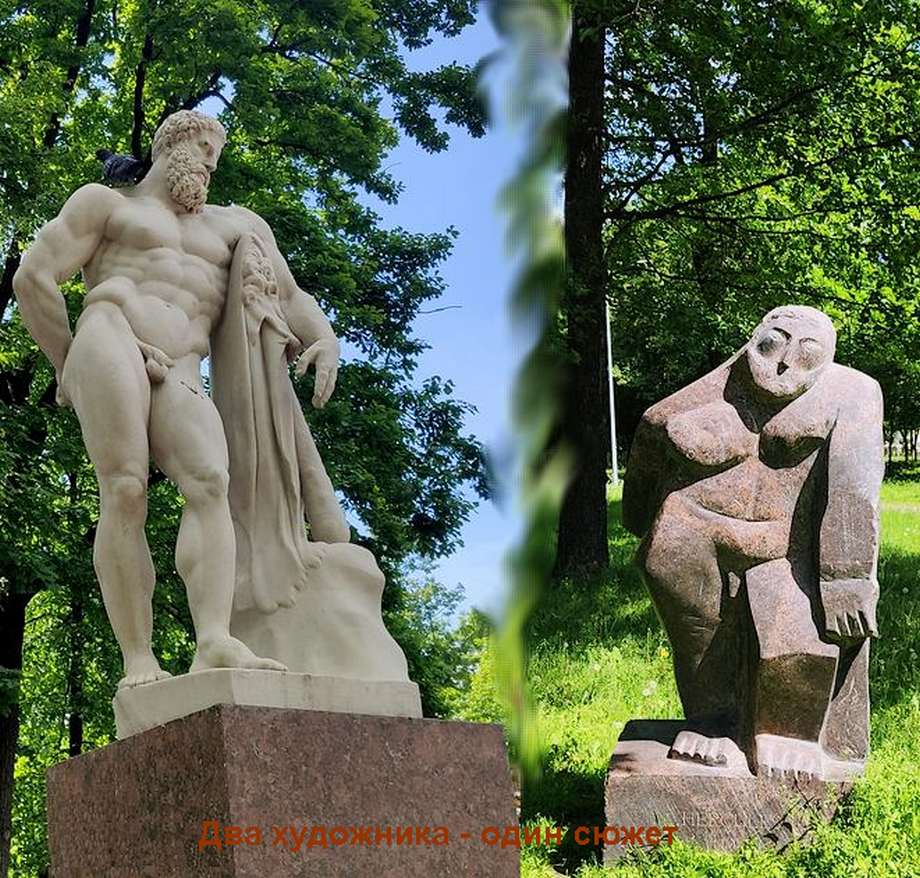
    St. Petersburg is full of art. Works of art await you in museums and art galleries. The theater is full of art. Even walking through parks, you’ll see works of art. This is wonderful, but as someone who isn’t educated in the fine arts, I sometimes have some doubts.

    Two artists depicted the same scene in different ways

    Here in this photograph are two sculptures. They stand in parks in St. Petersburg.
    One is most likely a copy of some ancient sculpture, probably from ancient Greece, or perhaps Rome.
    The second is apparently the work of a modern artist.
    But essentially, these two artists depicted the same subject, just differently.

    The difference is obvious to the naked eye. Has the skill of sculptors deteriorated so much since ancient times? Or did the sculptor simply not have the time to complete the figure? Or is it just us men who have changed so much since ancient times?

    Of course I’m joking. He’s an artist—that’s how he sees things. And it’s not for me, an amateur, to judge high art.

  • Internet content may soon become paid

    The internet is undergoing major changes (recently), including as a result of the development of Artificial Intelligence. As a result, some content may become paid in the near future. We will have to pay for information. That’s my prediction.

    Why? Imagine this: you ask a question online or ask a “smart speaker” by voice, and you receive a response prepared by Artificial Intelligence. But in most cases, AI simply pulls information from websites.

    Website authors prepared content, hoping to generate income from advertising, and received nothing! No income!

    Would you agree that this is unfair? Journalists wrote articles. Analysts analyzed the situation. Designers created designs. And no one will get their just due.

    If nothing is done, journalists will soon quit their jobs, and some websites will close. AI will have no sources of information. In fact, this process is already underway, and many publications are laying off staff.

    What should we do? There’s a solution. It’s been around for a long time. We’ll have to make access to unique content paid. Websites with news, investigative journalism, and situational analysis could become paid. We’ll have to buy a subscription to visit these sites.

    Most importantly, AI bots won’t be allowed onto websites unless their creators pay for the content.

    No need to worry. We already pay internet providers for internet access. Perhaps access to some websites will be included in internet service provider rates.

    Many websites will remain free. For example, there’s no need to make access to museum, theater, or airline websites pay. But then again, why not?

    Most likely, several state media websites will remain free, because the government needs to communicate its point of view to citizens.

    Of course, this is just a forecast, but something is bound to happen. Perhaps publishers will come up with something else.

  • This is the future of tourism, perhaps, or perhaps certainly. AI could make the job of a tour guide obsolete.

    A family of Chinese tourists left a hotel in the historic center of Istanbul. A hotel employee greeted them warmly at the reception and asked if they would like to book a tour or hire a personal guide. No, we don’t need one.

    Outside, the eldest son (probably a student at a Chinese university) took out his smart glasses, connected them via Bluetooth to his smartphone, and scanned the area in front of the hotel.

    – Where do you suggest we go?
    – I suggest turning left along Küçük Hagia Sophia Street. If you walk about 300 meters, you’ll come to the Blue Mosque.
    – Look, on the left. You see a building with a large dome and minarets. That’s the Blue Mosque. It’s one of Istanbul’s landmarks.
    – Tell us about it. What’s famous about it?
    – The Blue Mosque, or Sultanahmet Mosque, is the most important mosque in Istanbul and one of the city’s symbols. It’s an outstanding example of Islamic and world architecture.
    – “I see. Where are we going next?”
    – “I’ll take you to the Hagia Sophia now. It’s a famous monument of Byzantine architecture, a symbol of the Byzantine Golden Age. There, you can see it now.”
    – “We’d also like to take a ferry ride on the Bosphorus.”
    – “I’ll take you to the pier and show you where you can buy an Istanbulkart. You can use it to pay for the ferry.”

    “Near a small café, a man standing at the entrance said something to the tourists. Probably in Turkish.”
    “Come in! We have the most delicious coffee in Istanbul,” the virtual assistant translated from Turkish to Chinese.

    The tourist pointed his smart glasses at the café entrance.
    “We don’t have a recommendation for your café, sorry.”
    “The café owner said something in Turkish, but the virtual translator couldn’t translate it.

    “He probably didn’t pay for the advertising, which is why he’s not recommended,” the older family member suggested.

    As they approached the pier, two people were captured on camera by the virtual glasses. The virtual assistant, using its artificial intelligence, instantly identified them and issued a warning: beware, they could be pickpockets. Don’t let them come closer than arm’s length.

    A stranger approached the tourists with a welcoming smile and his arms outstretched for a hug, but the head of the family stepped forward and said in Chinese, “Stop, don’t come any closer.”

    It’s unclear how or into what language (clearly not Turkish) the virtual assistant translated his words, but the stranger’s smile vanished and he turned back.

    When did this happen?
    Tomorrow. This is a fictional story about the near future. A future when artificial intelligence and high-speed 5G internet will change our lives. When all the world’s information will be available to us at our whim. Our lives could change dramatically, and very soon.

    Science fiction? No. Many cities are already covered by 5G internet, and even bloggers can’t keep up with AI developments.

    The travel agency representative was bored at the hotel. No bookings. AI has made the tour guide profession obsolete. There are still jobs, but only in places without cell phone service or internet. Somewhere in the remote corners of the planet.

    He needs to retrain for another profession. Maybe work as a pizza delivery boy?

  • How I started using AI

    News: An American company is laying off about 40% of its staff. With the development of AI (Artificial Intelligence), work has become more efficient and productive. Tasks can be completed faster with fewer people on the team. You don’t want to be among those laid off, do you?
    Which company? It doesn’t matter. There are plenty of such companies.

    So I decided to try out what AI is and how it can be useful.

    First task. I have a photograph: a view from a hotel window in Moscow. The photo shows the Ostankino Tower and VDNKh. I asked the AI ​​to write a caption for this photo for publication on social media.

    The task took about two seconds to complete. The AI ​​offered five options to choose from! Here are two of them.

    1. “If you put an astronaut, a VDNKh construction worker, and a modern blogger in the same hotel, what would they talk about while looking out the window? 👨‍🚀👷‍♂️📱
      Share your ideas in the comments! And guess which legendary Moscow hotel this photo was taken from (spoiler: the name speaks for itself). 🏨👇”
    2. “Moscow wasn’t built in a day… and it doesn’t open in a day. But when you see it from this angle, it’s love forever. Imagine: morning, a cup of coffee, the country’s main television center and the majestic VDNKh (All-Russian Exhibition Center) waking up outside the window. Where else can you feel like a movie star? 🎬❤️
      Let’s give it a ❤️ if you also love viewing the city from above!”

    How long would it take someone else? Probably more than two seconds.

    The next assignment was to write an article about real estate.
    The prompt went something like this:
    Write an article with recommendations for those planning to buy an apartment on the existing market in St. Petersburg. Possible questions that may require answers or topics that need to be covered:
    What are the risks of buying an apartment on the resale market in St. Petersburg?
    Is it possible to do this without a realtor?
    What points should you pay attention to when buying an apartment on the resale market?
    How are payments and money transfers handled?
    What are the steps involved in buying an apartment on the resale market?
    When is a notary’s assistance needed?
    Where to find a good realtor?

    This task took much longer to complete. About ten seconds, perhaps. The result is a lengthy, informative article that could truly be useful to potential real estate buyers.

    Of course, I had to review the article and edit it, but not many edits were required.

    The article itself is here –

    The next case of interaction with AI. The task was to collect recommendations for a tourist planning a trip to Istanbul.

    The task conditions are not preserved, but they were roughly as follows: one day in Istanbul, what places to visit, getting around the city on foot, leisurely pace. I needed locations, the optimal sequence of travel, time, and distance.

    The AI ​​completed the task in about 10 seconds.
    A lot of editing had to be done. It’s impossible to evaluate how well the article turned out because I haven’t been to Istanbul yet, but I (maybe) will soon.

    The AI ​​came up with this. In short, it’s something like this: Final travel plan:

    1. Sultanahmet Square (Start).
      Walk 2-3 minutes →
    2. Blue Mosque.
      Walk 2-3 minutes →
    3. Hagia Sophia.
      Walk 4-5 minutes →
    4. Topkapi Palace.
      Walk 15-20 minutes →
    5. Grand Bazaar.
      Walk 20-25 minutes →
    6. Galata Bridge.
      Walk 20-25 minutes. (Uphill!) →
    7. *Galata Tower (end of the walk).

    The total walking distance is approximately 5.5–6 km, not including travel within the sights themselves. With time for sightseeing and rest, you’ll be able to complete the tour within the planned time.

    The AI’s response was much more detailed; it’s just too long a message here.

    How well do you know Istanbul? How would you rate AI recommendations for tourists?

    The article is here – https://www.rus-tourist.ru/?p=38&lang=en

    It’s difficult for a modern person to survive without the help of AI. AI can indeed simplify life and work, but it can also mislead and leave people without work. Therefore, gaining experience with AI seems absolutely necessary.

Наш сайт и партнёры, такие как яндекс-метрика, рекламная сеть яндекса и другие могут использовать cookie-файлы для наилучшего представления вам информации и нашего сайта. Продолжая использовать этот сайт, вы соглашаетесь с использованием cookie-файлов.
Принять
Отказаться